
Hair loss is extremely common, and there is no shortage of products promising to reverse it, which makes knowing what actually works genuinely difficult. The good news is that some treatments are backed by solid evidence, while others are mostly hype. This article takes an evidence-based look at the most effective hair regrowth treatments, how they work, and what you can realistically expect from each. Please note this is general information only and not medical advice, and that the right treatment depends heavily on what is causing your hair loss in the first place.
Why Hair Loss Happens
Effective treatment starts with understanding the cause, because what works depends on why your hair is thinning. The most common type is hereditary, or pattern, hair loss, which is driven by genetics and hormones. Other causes include stress-related shedding, nutritional deficiencies, and underlying medical conditions. Identifying the cause is the essential first step, since a treatment that suits pattern hair loss may do little for shedding triggered by stress. Anyone serious about hair regrowth benefits from pinning down the cause early, ideally with professional input, as this shapes which of the treatments below will actually help.
Minoxidil: The Proven Topical
Minoxidil is one of the two best-evidenced hair loss treatments available. Applied directly to the scalp, it is widely used and clinically supported for slowing hair loss and stimulating new growth. It works for many people across different types of hair loss, which is part of its appeal. The key thing to understand is that it requires consistent, ongoing use to maintain results. If you stop, the benefits gradually reverse, so it is best thought of as a long-term commitment rather than a quick fix.
See also: How an All-in-One Platform Can Simplify Device Lifecycle Management
Finasteride: The Prescription Option
Finasteride is the other first-line medication, available by prescription and used primarily for male pattern hair loss. It works by reducing the hormone linked to the shrinking of hair follicles, helping to slow loss and in many cases support regrowth. Because it is a prescription treatment with potential considerations, it requires medical guidance to use appropriately. As with minoxidil, it needs ongoing use to maintain its effects. For many men, the two medications are used together, which tends to produce stronger results than either alone.
Microneedling and Derma Rolling
Microneedling, including at-home derma rolling, has become an increasingly popular addition to hair loss routines. The evidence suggests it works best as an adjunct rather than a standalone treatment, particularly alongside minoxidil. By creating tiny micro-injuries in the scalp, it is thought to stimulate the area and improve the absorption of topical treatments. Studies pairing microneedling with minoxidil have shown better results than minoxidil used on its own, making it a worthwhile consideration as part of a broader plan rather than a complete solution in itself.
Low-Level Laser Therapy
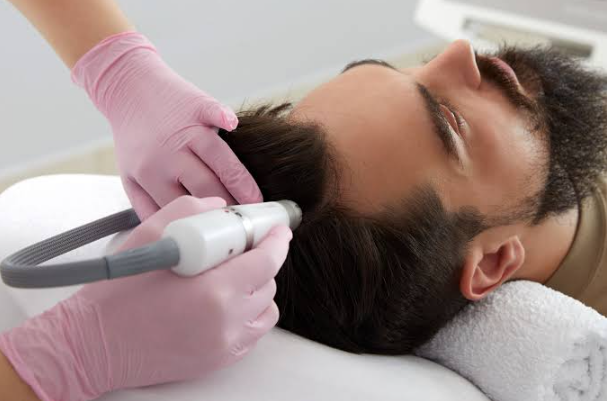
Low-level laser therapy is another option with some clinical support. Devices such as laser caps and combs use light directed at the scalp to stimulate the hair follicles. It is a non-invasive approach that appeals to those who prefer not to use medications, though results vary from person to person and it tends to work gradually over the longer term. As with most hair loss treatments, consistency is important, and it is often used alongside other approaches rather than in isolation.
Platelet-Rich Plasma (PRP)
Platelet-rich plasma is an in-clinic therapy that has gained attention in recent years. It uses components from the patient’s own blood, which are rich in growth factors, injected into the scalp to stimulate hair growth. Because it is a medical procedure, it must be administered by a professional, and it typically requires repeat sessions to achieve and maintain results. Evidence suggests it can be a safe and effective option for some people, though it represents a greater investment of both time and cost than topical treatments.
Hair Transplant Surgery
For those seeking a permanent solution, hair transplant surgery is the most definitive option. It involves relocating healthy follicles from areas of good growth to thinning or balding areas, offering lasting results for suitable candidates. It is also the most invasive and costly approach, and it is not appropriate for everyone, depending on the extent and type of hair loss. For the right candidate, however, it can deliver natural-looking, permanent regrowth that other treatments cannot match.
Do Natural Remedies and Supplements Work?
Natural remedies and supplements are widely marketed, so it is worth being realistic about them. Options like certain oils, biotin, and good scalp care may support overall scalp health, but the evidence for reversing genuine hair loss on their own is limited. They are best viewed as complementary to proven treatments rather than replacements for them. If your hair loss has a genuine underlying cause, relying on supplements alone is unlikely to deliver the results you are hoping for.
What Results Can You Realistically Expect?
Setting realistic expectations matters across all these treatments. Results generally take several months to appear, and they vary depending on the individual and the cause of their hair loss. Starting early, while follicles are still active, tends to produce the best outcomes. Importantly, combining treatments often outperforms any single approach, which is why many effective plans use more than one method together. Patience and consistency are essential, as hair regrowth is a gradual process rather than an overnight transformation.
How to Choose the Right Treatment
Choosing the right treatment comes down to matching it to the cause and severity of your hair loss. Starting early gives you the best chance of success, and combining complementary approaches often works better than relying on one. Above all, consulting a professional for an accurate diagnosis and a tailored plan is the most reliable way to get results, since they can identify the cause and recommend the treatments most likely to help in your specific situation.
Frequently Asked Questions
What is the most effective hair regrowth treatment?
For many people, minoxidil and finasteride are the most effective and best-evidenced options, especially when used together and started early.
Do minoxidil and finasteride work?
Yes, both are clinically supported and widely used. They require ongoing use to maintain results, and are often more effective when combined.
Can you regrow hair naturally?
Natural remedies and supplements may support scalp health, but evidence for reversing genuine hair loss on their own is limited.
How long does hair regrowth take?
Most treatments take several months to show results, and outcomes vary by individual and cause. Starting early improves your chances.
Bottom Line
The most effective hair regrowth treatments are the evidence-backed ones, with minoxidil and finasteride leading the way, often most effective when combined and started early. Beyond these, options ranging from microneedling and laser therapy to PRP and hair transplants suit different causes and budgets. This article is general information only and not medical advice. Because the right approach depends on the cause of your hair loss, the best step is to consult a professional who can diagnose your situation and recommend a tailored plan.