Newsletter Subscribe
Enter your email address below and subscribe to our newsletter

 ByJohn A
Managing smartphones across their entire lifecycle can become increasingly complex as device inventories grow. Businesses may need to identify incoming devices, evaluate their condition, verify functionality, record ownership information, process data, and determine whether each device should be reused, resold, refurbished, or retired. When these activities are handled through disconnected tools, teams can spend unnecessary time moving information between systems.
An all-in-one platform can bring these activities into a more connected workflow. Instead of relying on multiple applications for individual tasks, businesses can centralize important device information and processing activities. A diagnostic tool for mobile phones can also become part of this approach, helping teams evaluate devices consistently while maintaining records throughout the device lifecycle.
The smartphone lifecycle involves several stages, and each stage can generate information that matters later. A device may move between employees, departments, facilities, refurbishment teams, and resale channels before reaching its final destination.
When these stages are managed separately, information can become fragmented. An integrated platform provides a way to connect these activities so teams have better visibility into what has happened to each device and what needs to happen next.
A smartphone’s lifecycle does not begin and end with a simple inventory entry. Teams may need to record its identification details, condition, diagnostic results, location, processing status, and eventual disposition.
An all-in-one platform can organize these details within a connected workflow. Instead of maintaining separate records for different stages, employees can work from a centralized source of information.
This can be particularly valuable for businesses processing large inventories. A connected record can help employees quickly understand where a device is in the lifecycle and reduce the need to repeatedly request information from other teams.
Using separate tools for diagnostics, inventory management, data processing, and reporting can create unnecessary handoffs. Employees may need to copy information manually, which increases the possibility of incomplete or inconsistent records.
An integrated platform reduces these transitions by connecting related activities. For example, information collected during a device inspection can remain associated with the device as it moves through subsequent processing stages.
This creates a smoother workflow and allows businesses to spend less time managing administrative tasks. It also gives teams a clearer understanding of the device’s history.
Device diagnostics are an important part of evaluating smartphones before they are reused, refurbished, resold, or retired. However, manually testing every device can become time-consuming when organizations handle large volumes.
A centralized platform can make diagnostics part of the broader device lifecycle instead of treating testing as an isolated activity. This helps businesses connect technical evaluations with the operational decisions that follow.
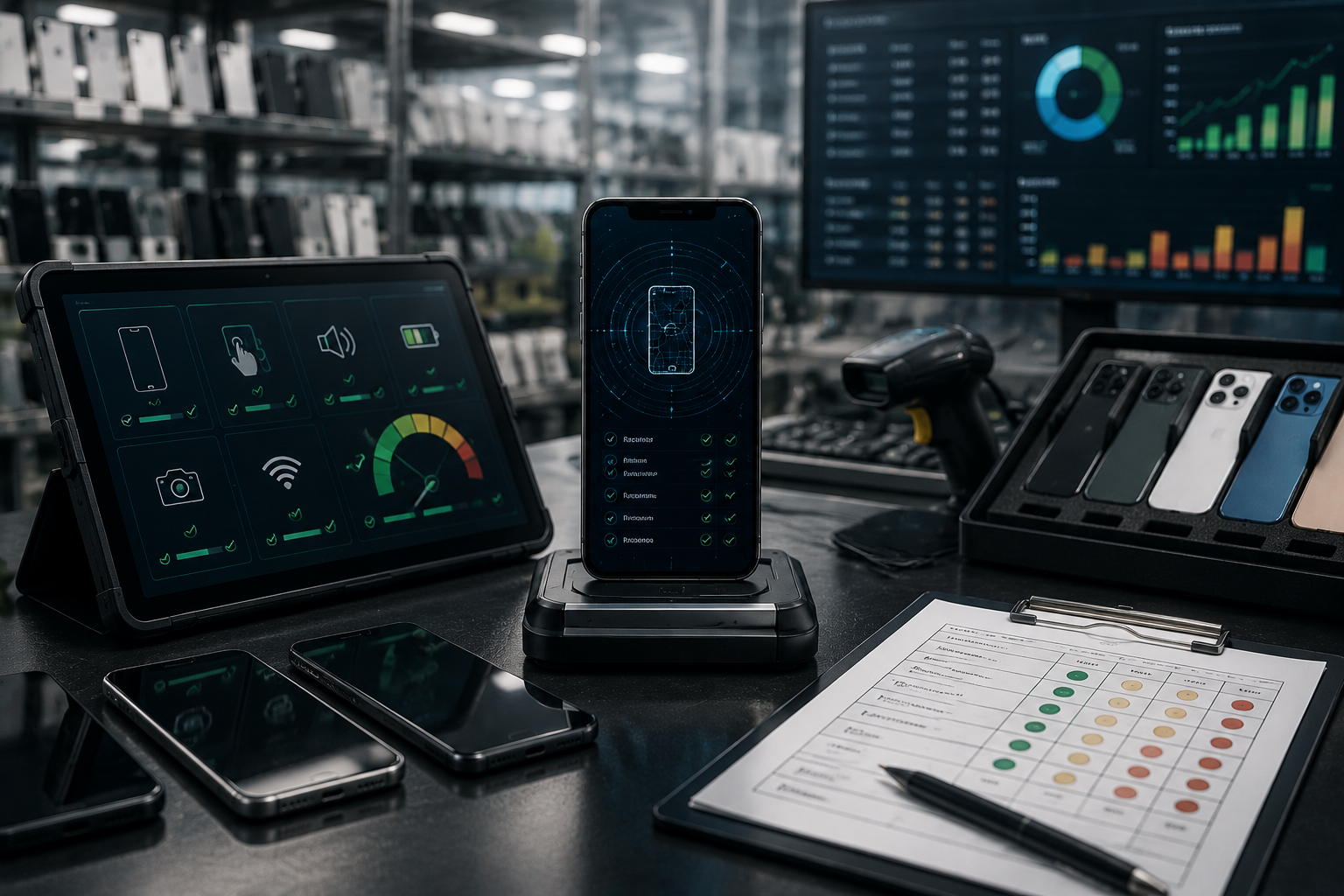
A diagnostic tool for mobile phones can help teams assess various aspects of a smartphone during the inspection process. Depending on the workflow, this may include checking hardware functions, connectivity, display performance, cameras, speakers, microphones, and other device characteristics.
Keeping these results connected to the relevant device record can make them easier to review later. Employees do not have to rely solely on separate notes or manually recreated reports.
For example, a refurbishment team could review previous diagnostic results before deciding which devices require additional testing. This creates a more continuous workflow from initial inspection to the next stage.
Different employees may approach manual diagnostics differently unless clear procedures are established. This can make results harder to compare across a large inventory.
Mobile phone diagnostic software can support standardized testing by providing a repeatable process for evaluating devices. Businesses can establish common testing requirements and use the resulting information to support more consistent decisions.
This approach is especially useful when devices are processed across different locations or shifts. A standardized workflow helps maintain continuity even when different employees are responsible for inspections.
Device lifecycle management becomes more effective when inventory information and processing activities are connected. Knowing that a business owns a particular smartphone is useful, but knowing its condition, current status, and processing history provides much greater operational visibility.
An all-in-one platform can connect these different pieces of information. This allows businesses to track devices as they move through different stages without relying on multiple disconnected records.
A centralized platform can provide a clearer view of where devices are within the operational workflow. Businesses can track whether a smartphone is awaiting inspection, undergoing refurbishment, ready for resale, or scheduled for another outcome.
Useful tracking information can include:
Having these details connected can make inventory reviews more efficient. It can also help teams identify devices that have remained in one stage longer than expected.
Repeatedly entering the same device information into different systems can consume time and introduce errors. It can also create discrepancies when one record is updated while another is left unchanged.
An integrated platform can reduce unnecessary duplication by keeping information connected across related workflows. Employees can use existing device records rather than repeatedly recreating them.
This is particularly valuable when organizations process high volumes. Even a small reduction in repetitive data entry can become significant when multiplied across hundreds or thousands of devices.
The value of an all-in-one platform extends beyond operational efficiency. Centralized information can help businesses make more informed decisions about what should happen to each device.
Instead of treating every smartphone in the same way, teams can use available information to determine an appropriate next step. This can improve resource allocation and help organizations create more structured lifecycle processes.
A smartphone in excellent working condition may follow a very different path from a device with significant functional or physical issues. Accurate information helps businesses distinguish between these scenarios.
For example, a device that passes its required diagnostic checks may move toward reuse or resale, while another device may require additional evaluation or a different disposition route.
CellDe can support organizations looking to bring structured device information into their lifecycle workflows. When diagnostic information and device records are connected, teams can make decisions using a more complete picture of each smartphone.
Refurbishment teams need reliable information to determine which devices require attention and what type of work may be necessary. Without organized records, employees may need to repeat assessments or manually search through previous documentation.
An integrated system can make relevant diagnostic and condition information available before refurbishment begins. This allows teams to prioritize devices and organize work based on known requirements.
Over time, historical information can also reveal recurring patterns. Businesses may discover which device types commonly require certain forms of attention, helping them plan staffing, equipment, and processing capacity more effectively.
Reporting becomes more useful when it draws information from connected lifecycle activities. Instead of manually combining data from multiple sources, businesses can use centralized records to understand how devices are moving through the operation.
This can provide management teams with a clearer view of throughput, processing stages, inventory conditions, and other operational measures. Better visibility makes it easier to identify bottlenecks and evaluate whether workflows are meeting business objectives.
Businesses should identify metrics that reflect the efficiency and quality of their device lifecycle processes. The right measurements will depend on the organization’s goals and operating model.
Examples include:
Tracking these metrics over time can reveal operational trends. Teams can then focus improvement efforts on stages where delays or inconsistencies are most common.
A centralized reporting environment can reduce the time employees spend searching for information. Instead of opening multiple systems to understand a device’s history, relevant details can be available through a connected record.
This can benefit both operational employees and managers. Staff can make faster day-to-day decisions, while management can gain a broader understanding of how the lifecycle program is performing.
CellDe can fit into a technology strategy where device verification, diagnostics, and organized device information are treated as connected components of lifecycle management.
An all-in-one platform can simplify device lifecycle management by connecting activities that are often handled separately. Diagnostics, inventory tracking, processing records, and reporting can work together rather than operating as isolated functions.
Businesses should begin by identifying the biggest workflow gaps in their current processes. From there, they can prioritize integration opportunities that reduce repetitive work, improve information visibility, and create more consistent device handling.
An all-in-one approach can make device lifecycle management more organized, efficient, and scalable. By connecting inventory information, diagnostics, processing activities, and reporting, businesses can reduce fragmented workflows and gain a clearer understanding of every smartphone they manage.
A diagnostic tool for mobile phones can provide valuable condition and functionality information, while mobile phone diagnostic software can help standardize how devices are evaluated. When these capabilities are connected with broader lifecycle records, teams can make more informed decisions about reuse, refurbishment, resale, and final disposition.
The most effective strategy is to build a connected workflow around the entire device journey rather than optimizing individual tasks in isolation. With CellDe supporting structured device information and verification workflows, businesses can take a practical step toward simplifying device lifecycle management and creating greater visibility across their mobile operations.